TopStudy

Tiếng Anh · Lớp 9

Đề cương ôn tập cuối kì 2 Tiếng Anh 9 Friends Plus có đáp án - Part 5: Reading

61 câu · 90 phút · Ngân hàng đề TopStudy. Đáp án và lời giải do TopStudy biên soạn, mở ngay dưới từng câu.

Làm bài

Nội dung đề

Phần I. Trắc nghiệm nhiều lựa chọn

Câu 1

1 điểm

What does this notice tell us?

EVENING PERFORMANCE

Refreshments are served

only during the interval

  1. Đáp án A: You can have a drink during the break.
  2. Đáp án B: Help yourself to drink after the performance.
  3. Đáp án C: Snacks are available before the performance.
  4. Đáp án D: You are not allowed to drink during the break.
Xem đáp án và lời giải

Lời giải do TopStudy biên soạn

Đáp án: A

A

What does this notice tell us? (Thông báo này nói cho chúng ta điều gì?)

EVENING PERFORMANCE

Refreshments are served

only during the interval

MÀN TRÌNH DIỄN BUỔI TỐI

Đồ ăn nhẹ chỉ được phục vụ vào thời gian giải lao

A. You can have a drink during the break: Bạn có thể uống một chút gì đó trong giờ giải lao

" Đúng, dựa trên thông tin Refreshments are served only during the interval (Đồ ăn nhẹ chỉ được phục vụ vào thời gian giải lao)

Ta có: drink = refreshments, và interval = break

B. Help yourself to drink after the performance: Tự lấy đồ uống sau màn trình diễn

" Loại vì thông tin after the performance (sau màn trình diễn) không xuất hiện trong thông báo

C. Snacks are available before the performance: Đồ ăn nhẹ có sẵn trước màn trình diễn

" Loại vì thông tin before the performance (trước màn trình diễn) không xuất hiện trong thông báo

D. You are not allowed to drink during the break: Bạn không được phép uống gì trong giờ giải lao

" Loại, vì ngược với thông tin Refreshments are served only during the interval (Đồ ăn nhẹ chỉ được phục vụ vào thời gian giải lao) trong thông báo


Câu 2

1 điểm

What does this sign mean?

Hình minh hoạ

  1. Đáp án A: Beware of fire.
  2. Đáp án B: Beware of hurricane.
  3. Đáp án C: Beware of volcano.
  4. Đáp án D: Beware of storm.
Xem đáp án và lời giải

Lời giải do TopStudy biên soạn

Đáp án: C

C

What does this sign mean? (Biển báo này có nghĩa là gì?)

Hình minh hoạ

A. Beware of fire: Đề phòng hỏa hoạn

B. Beware of hurricane: Coi chừng bão cuồng phong

C. Beware of volcano: Coi chừng núi lửa

D. Beware of storm: Coi chừng giông bão

- Ta thấy trong biển báo có hình núi lửa đang phun trào.

" Chọn C

Câu 3

1 điểm

What does this sign mean?

Hình minh hoạ

  1. Đáp án A: Taking photos is allowed.
  2. Đáp án B: You shouldn’t take photos here.
  3. Đáp án C: You mustn’t take photos here.
  4. Đáp án D: This camera isn’t working.
Xem đáp án và lời giải

Lời giải do TopStudy biên soạn

Đáp án: C

C

What does this sign mean? (Biển báo này có nghĩa là gì?)

Hình minh hoạ

A. Taking photos is allowed: Cho phép chụp ảnh

B. You shouldn’t take photos here: Bạn không nên chụp ảnh ở đây

C. You mustn’t take photos here: Bạn không được phép chụp ảnh ở đây

D. This camera isn’t working: Camera này không hoạt động

- Biển hình tròn, viền đỏ, có gạch chéo là biển cấm không được phép làm gì.

" Chọn C

Câu 4

1 điểm

What does this notice tell us?

Hình minh hoạ

  1. Đáp án A: 50% of the items will be sold next week.
  2. Đáp án B: All items will be half price in the spring.
  3. Đáp án C: Many items will be half price next week.
  4. Đáp án D: After the spring sale many items will cost 50% more.
Xem đáp án và lời giải

Lời giải do TopStudy biên soạn

Đáp án: C

C

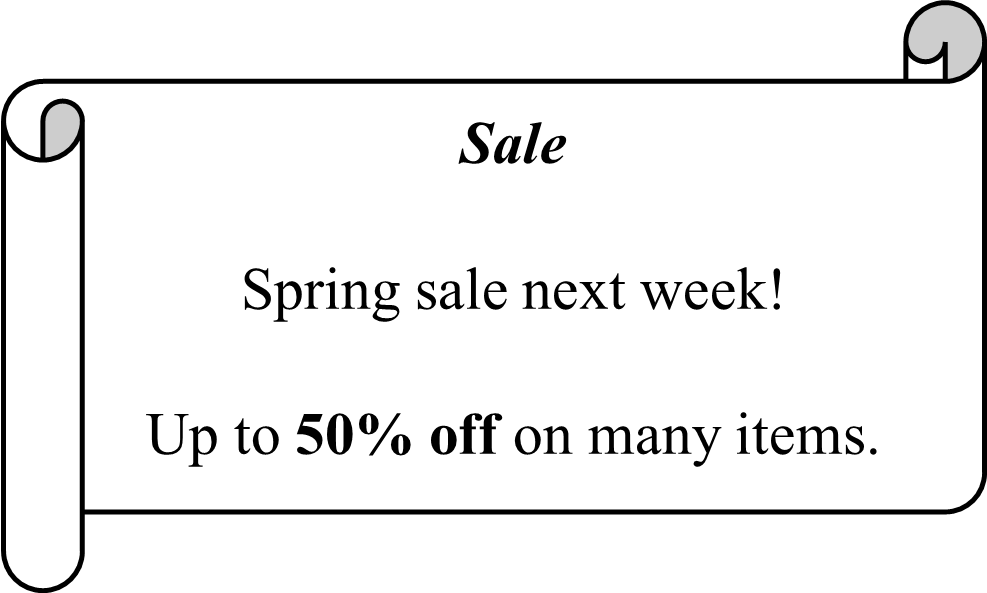
What does this notice tell us? (Thông báo này nói cho chúng ta điều gì?)

Sale

Spring sale next week!

Up to 50% off on many items.

Khuyến mãi

Đợt giảm giá mùa xuân vào tuần tới!

Giảm đến 50% cho nhiều mặt hàng.

A. 50% of the items will be sold next week: 50% mặt hàng sẽ được giảm vào tuần tới.

" Loại vì không trùng khớp thông tin:

Thông tin Up to 50% off on many items trong thông báo có nghĩa là: nhiều mặt hàng sẽ giảm giá đến 50%.

Thông tin ở phương án này có nghĩa là: nửa số mặt hàng của quán sẽ được bán.

B. All items will be half price in the spring: Tất cả mặt hàng sẽ được giảm giá một nửa vào mùa xuân.

" Loại vì theo thông tin Up to 50% off on many items (Giảm đến 50% cho nhiều mặt hàng), chỉ có một số mặt hàng, chứ không phải tất cả đều giảm giá đến 50%.

C. Many items will be half price next week: Nhiều mặt hàng sẽ giảm giá một nửa vào tuần tới

" Đúng vì trùng khớp thông tin Up to 50% off on many items (Giảm đến 50% cho nhiều mặt hàng) trong thông báo.

D. After the spring sale many items will cost 50% more: Sau mùa xuân, nhiều mặt hàng sẽ tăng giá thêm 50%

" Loại vì theo thông tin này không xuất hiện trong thông báo.

Câu 5

1 điểm

What does this sign mean?

Hình minh hoạ

  1. Đáp án A: Using mobile phones is allowed when pumping gas.
  2. Đáp án B: Using mobile phones is prohibited when pumping gas.
  3. Đáp án C: Making a phone call when pumping gas is possible.
  4. Đáp án D: Using mobile phones isn’t dangerous when pumping gas.
Xem đáp án và lời giải

Lời giải do TopStudy biên soạn

Đáp án: B

B

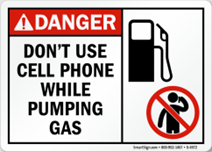
What does this sign mean? (Biển báo này có nghĩa là gì?)

Hình minh hoạ

Nguy hiểm

Không được phép sử dụng điện thoại trong khi đang đổ xăng

A. Using mobile phones is allowed when pumping gas: Sử dụng điện thoại di động được cho phép khi đổ xăng

" Loại vì theo thông tin Don’t use cell phone while pumping gas (Không được phép sử dụng điện thoại trong khi đang đổ xăng), mọi người không được phép dùng điện thoại.

B. Using mobile phones is prohibited when pumping gas: Sử dụng điện thoại di động bị cấm khi đổ xăng

" Đúng vì trùng khớp thông tin Don’t use cell phone while pumping gas (Không được phép sử dụng điện thoại trong khi đang đổ xăng).

C. Making a phone call when pumping gas is possible: Gọi điện thoại khi đổ xăng là việc có thể làm

" Loại vì theo thông tin Don’t use cell phone while pumping gas (Không được phép sử dụng điện thoại trong khi đang đổ xăng), mọi người không được phép dùng điện thoại.

D. Using mobile phones isn’t dangerous when pumping gas: Sử dụng điện thoại di động không nguy hiểm khi đang đổ xăng

" Loại vì ngược thông tin Danger trong biển báo

Câu 6

1 điểm
The skeleton of King Richard III (6) ________ on 4th February 2013.
  1. Đáp án A: had identified
  2. Đáp án B: identified
  3. Đáp án C: was identified
  4. Đáp án D: had been identified
Xem đáp án và lời giải

Câu 7

1 điểm
He was buried in Greyfriars Church in Leicester, (7) ________ was destroyed in 1585.
  1. Đáp án A: that
  2. Đáp án B: which
  3. Đáp án C: who
  4. Đáp án D: where
Xem đáp án và lời giải

Câu 8

1 điểm
Luckily, historians (8) ________ written descriptions of the church's location and realised that it was probably under a car park in the centre of Leicester.
  1. Đáp án A: dated
  2. Đáp án B: inspected
  3. Đáp án C: removed
  4. Đáp án D: discovered
Xem đáp án và lời giải

Câu 9

1 điểm
(9) ________ the chances of finding Richard III were very low, they decided to excavate the site, and work started in August 2012.
  1. Đáp án A: Although
  2. Đáp án B: Furthermore
  3. Đáp án C: So that
  4. Đáp án D: However
Xem đáp án và lời giải

Câu 10

1 điểm
After examining the skeleton carefully, experts discovered that it belonged to a man in his early 30s (10) ________ a back problem.
  1. Đáp án A: from
  2. Đáp án B: of
  3. Đáp án C: with
  4. Đáp án D: at
Xem đáp án và lời giải

Câu 11

1 điểm
Finally, they employed DNA techniques (11) ________ his identity.
  1. Đáp án A: confirm
  2. Đáp án B: to confirm
  3. Đáp án C: confirming
  4. Đáp án D: confirmed
Xem đáp án và lời giải

Câu 12

1 điểm
They used DNA from his sister’s descendants, and it (12) ________ the skeleton's DNA.
  1. Đáp án A: matched
  2. Đáp án B: supported
  3. Đáp án C: uncovered
  4. Đáp án D: served
Xem đáp án và lời giải

Câu 13

1 điểm
Vaccines are used to protect the body against certain (13) ________ diseases before they come into the human body.
  1. Đáp án A: extreme
  2. Đáp án B: risky
  3. Đáp án C: dangerous
  4. Đáp án D: endangered
Xem đáp án và lời giải

Câu 14

1 điểm
Global vaccination programmes have (14) ________ or controlled many deadly diseases around the world.
  1. Đáp án A: eradicated
  2. Đáp án B: demolished
  3. Đáp án C: destroyed
  4. Đáp án D: strengthened
Xem đáp án và lời giải

Câu 15

1 điểm
Vaccines help (15) ________ the body’s immunity by imitating a real infection.
  1. Đáp án A: weaken
  2. Đáp án B: develop
  3. Đáp án C: raise
  4. Đáp án D: advance
Xem đáp án và lời giải

Câu 16

1 điểm
(16) ________ the vaccine is introduced into the body, usually by injection or orally, the immune system reacts to the invading substance as if it were a real disease.
  1. Đáp án A: When
  2. Đáp án B: Until
  3. Đáp án C: Before
  4. Đáp án D: While
Xem đáp án và lời giải

Câu 17

1 điểm
If the body (17) ________ into contact with the disease in the future, the immune system will respond immediately and protect against the infection.
  1. Đáp án A: is coming
  2. Đáp án B: will come
  3. Đáp án C: come
  4. Đáp án D: comes
Xem đáp án và lời giải

Câu 18

1 điểm
Several doses of the vaccine are needed to build up complete immunity; (18) ________, the vaccination is repeated three times.
  1. Đáp án A: because
  2. Đáp án B: but
  3. Đáp án C: therefore
  4. Đáp án D: so
Xem đáp án và lời giải

Câu 19

1 điểm
Others, like the yellow fever vaccine, are only necessary if you live in or visit a country (19) ________ the disease exists.
  1. Đáp án A: which
  2. Đáp án B: whom
  3. Đáp án C: that
  4. Đáp án D: where
Xem đáp án và lời giải

Câu 20

1 điểm
They were (20) ________ excited about the adventure that they had planned the trip weeks in advance.
  1. Đáp án A: so
  2. Đáp án B: too
  3. Đáp án C: such
  4. Đáp án D: very
Xem đáp án và lời giải

Câu 21

1 điểm
However, it (21) ________ to be their (22) ________ unpleasant experience.
  1. Đáp án A: turned into
  2. Đáp án B: turned out
  3. Đáp án C: went away
  4. Đáp án D: set off
Xem đáp án và lời giải

Câu 22

1 điểm
However, it (21) ________ to be their (22) ________ unpleasant experience.
  1. Đáp án A: more
  2. Đáp án B: the most
  3. Đáp án C: most
  4. Đáp án D: more than
Xem đáp án và lời giải

Câu 23

1 điểm
Then, their car broke down, and they had to wait (23) ________ a mechanic arrived.
  1. Đáp án A: after
  2. Đáp án B: as soon as
  3. Đáp án C: until
  4. Đáp án D: when
Xem đáp án và lời giải

Câu 24

1 điểm
When they finally reached the beach town, they were (24) ________ by the sight.
  1. Đáp án A: marvelled
  2. Đáp án B: shocked
  3. Đáp án C: amazed
  4. Đáp án D: frightened
Xem đáp án và lời giải

Câu 25

1 điểm
They tried to make the best of it by (25) ________ the town, but it was filled with tourist traps and overpriced restaurants.
  1. Đáp án A: exploring
  2. Đáp án B: discovering
  3. Đáp án C: detecting
  4. Đáp án D: observing
Xem đáp án và lời giải

Câu 26

1 điểm
In short, it was a (26) ________ experience; however, they learned the importance of being prepared for unexpected challenges during road trips.
  1. Đáp án A: challenging and rewarding
  2. Đáp án B: thrilling and incredible
  3. Đáp án C: fascinating and tiring
  4. Đáp án D: frustrating and disappointing
Xem đáp án và lời giải

Câu 27

1 điểm
I've just completed a brilliant 'Creative Technologies' course, which is far (27) ________ than any other technology course I have ever attended.
  1. Đáp án A: more beneficial than
  2. Đáp án B: the most beneficial
  3. Đáp án C: more beneficial
  4. Đáp án D: most beneficial
Xem đáp án và lời giải

Câu 28

1 điểm
If you desire (28) ________ more self-confidence in your design skills and discover your strengths, this might be perfect for you.
  1. Đáp án A: to gain
  2. Đáp án B: gaining
  3. Đáp án C: gain
  4. Đáp án D: gained
Xem đáp án và lời giải

Câu 29

1 điểm
In this course, you (29) ________ new technology to design innovative things.
  1. Đáp án A: employ
  2. Đáp án B: enable
  3. Đáp án C: allow
  4. Đáp án D: aim
Xem đáp án và lời giải

Câu 30

1 điểm
Sometimes, you (30) ________ to work independently (31) ________ you can be more self-reliant.
  1. Đáp án A: require
  2. Đáp án B: are required
  3. Đáp án C: are made
  4. Đáp án D: make
Xem đáp án và lời giải

Câu 31

1 điểm
Sometimes, you (30) ________ to work independently (31) ________ you can be more self-reliant.
  1. Đáp án A: so
  2. Đáp án B: so that
  3. Đáp án C: therefore
  4. Đáp án D: as a result
Xem đáp án và lời giải

Câu 32

1 điểm
For example, I designed a new application (32) ________, and it took a week to complete!
  1. Đáp án A: mine
  2. Đáp án B: me
  3. Đáp án C: my
  4. Đáp án D: myself
Xem đáp án và lời giải

Câu 33

1 điểm
I'd say that one of the major benefits of this course is the opportunity to socialize with others (33) ________ have similar interests.
  1. Đáp án A: which
  2. Đáp án B: whom
  3. Đáp án C: who
  4. Đáp án D: whose
Xem đáp án và lời giải

Phần II. Trắc nghiệm trả lời ngắn

Câu 34

1 điểm
John Larson, who invented the polygraph, was a psychologist.
Xem đáp án và lời giải

Câu 35

1 điểm
John Larson developed the polygraph entirely based on his own original research.
Xem đáp án và lời giải

Câu 36

1 điểm
The polygraph's ability to detect lies has been scientifically proven.
Xem đáp án và lời giải

Câu 37

1 điểm
Some law enforcement agencies use polygraphs because people tend to be truthful when facing them.
Xem đáp án và lời giải

Phần III. Trắc nghiệm nhiều lựa chọn

Câu 38

1 điểm
What is the OPPOSITE meaning of the word “accepted” underlined in the passage?
  1. Đáp án A: welcomed
  2. Đáp án B: rejected
  3. Đáp án C: approved
  4. Đáp án D: recognized
Xem đáp án và lời giải

Câu 39

1 điểm
The word “that” underlined in the passage refer to ________.
  1. Đáp án A: ideas
  2. Đáp án B: psychologists
  3. Đáp án C: John Larson
  4. Đáp án D: machine
Xem đáp án và lời giải

Câu 40

1 điểm
What is the main idea of the passage?
  1. Đáp án A: The future advancements in lie detection technology.
  2. Đáp án B: The historical development and legal standing of the polygraph.
  3. Đáp án C: The inventor and technical specifications of the polygraph.
  4. Đáp án D: The unreliability of the polygraph in lie detection and its continued use.
Xem đáp án và lời giải

Phần IV. Trắc nghiệm trả lời ngắn

Câu 41

1 điểm
The first programme mainly focuses on studying whales in laboratories.
Xem đáp án và lời giải

Câu 42

1 điểm
Participants in the whale-watching programme mostly focus on independent research.
Xem đáp án và lời giải

Câu 43

1 điểm
Individuals who are hard-working, dependable, and sociable are well-suited for the second programme.
Xem đáp án và lời giải

Câu 44

1 điểm
Effective teamwork is required to provide assistance to marine experts.
Xem đáp án và lời giải

Phần V. Trắc nghiệm nhiều lựa chọn

Câu 45

1 điểm
Which word is OPPOSITE in meaning to “cooperatively” underlined in the passage?
  1. Đáp án A: cooperatively
  2. Đáp án B: reluctantly
  3. Đáp án C: individually
  4. Đáp án D: actively
Xem đáp án và lời giải

Câu 46

1 điểm
The pronoun “them” underlined in the passage refers to ________.
  1. Đáp án A: Marine experts
  2. Đáp án B: Broken pieces of coral
  3. Đáp án C: Underwater nurseries
  4. Đáp án D: Coral reef ecosystem
Xem đáp án và lời giải

Câu 47

1 điểm
What is the main idea of the passage?
  1. Đáp án A: The challenges of organizing international volunteer programmes for young people.
  2. Đáp án B: The challenges teenagers face when participating in environmental volunteer activities.
  3. Đáp án C: Summer programmes designed to build character and promote environmental conservation.
  4. Đáp án D: The benefits of whale-watching and coral reef conservation for marine ecosystems.
Xem đáp án và lời giải

Phần VI. Trắc nghiệm trả lời ngắn

Câu 48

1 điểm
The National Gallery's roof is 43 metres in height.
Xem đáp án và lời giải

Câu 49

1 điểm
The National Gallery of Canada is a must-visit destination because it exhibits a valuable collection of art.
Xem đáp án và lời giải

Câu 50

1 điểm
The statue of three peacekeepers can be seen down from the top of the Peacekeeping Monument.
Xem đáp án và lời giải

Câu 51

1 điểm
The stature of Peacekeeping Monument was installed before the National Gallery was constructed.
Xem đáp án và lời giải

Phần VII. Trắc nghiệm nhiều lựa chọn

Câu 52

1 điểm
Which of the following details about the National Gallery of Canada is NOT mentioned?
  1. Đáp án A: Its location to the parliament buildings.
  2. Đáp án B: The materials used in its construction.
  3. Đáp án C: The specific artists whose paintings are displayed.
  4. Đáp án D: The year it was built.
Xem đáp án và lời giải

Câu 53

1 điểm
Which word is CLOSEST in meaning to the word "contemporary" underlined in the passage?
  1. Đáp án A: current
  2. Đáp án B: modern
  3. Đáp án C: ancient
  4. Đáp án D: primitive
Xem đáp án và lời giải

Câu 54

1 điểm
What is the main idea of the passage?
  1. Đáp án A: A historical overview of Ottawa's architectural development.
  2. Đáp án B: The cultural diversity in Canada's capital city.
  3. Đáp án C: A study of materials used in Ottawa's modern buildings.
  4. Đáp án D: A description of two significant landmarks in Ottawa.** **
Xem đáp án và lời giải

Phần VIII. Trắc nghiệm trả lời ngắn

Câu 55

1 điểm
The boat trip was a pleasant experience from the beginning to the end.
Xem đáp án và lời giải

Câu 56

1 điểm
The Suskis felt frightened because they were thinking about sharks.
Xem đáp án và lời giải

Câu 57

1 điểm
Dan and Kate were exhausted after swimming for fourteen hours.
Xem đáp án và lời giải

Câu 58

1 điểm
The captain was found by a rescue boat after 23 hours at sea, which was a happy ending.
Xem đáp án và lời giải

Phần IX. Trắc nghiệm nhiều lựa chọn

Câu 59

1 điểm
Which of the following was NOT mentioned as something Dan and Kate did immediately after getting out of the water?
  1. Đáp án A: Rested on the beach
  2. Đáp án B: Found a town
  3. Đáp án C: Picked some food
  4. Đáp án D: Called their family
Xem đáp án và lời giải

Câu 60

1 điểm
What can be inferred about the initial expectations of Dan and Kate's trip?
  1. Đáp án A: They were prepared for potential emergencies at sea.
  2. Đáp án B: They were experienced sailors looking for a thrill.
  3. Đáp án C: They had anticipated a challenging adventure with extreme weather.
  4. Đáp án D: They expected a relaxing and enjoyable vacation.
Xem đáp án và lời giải

Câu 61

1 điểm
What is the main topic of the passage?
  1. Đáp án A: A survival story after a boat sank during a fishing trip.
  2. Đáp án B: The dangers of fishing in bad weather.
  3. Đáp án C: A tragic journey to a sandy beach in the Caribbean.
  4. Đáp án D: How helicopters rescued people at sea.
Xem đáp án và lời giải

Đề cùng chủ đề

Tất cả đề Đề cương ôn tập học kì 2 Tiếng Anh 9 - Friends Plus · Các bộ sách Tiếng Anh Lớp 9